

Tech giant Microsoft has purchased hundreds of acres of land across Michigan with the intention of building data centers, including just outside of Grand Rapids.
As the demand for artificial intelligence services has increased, corporations like Microsoft have been trying to keep up. AI requires large storage capacities and computing systems, resulting in an influx of data centers being built across the United States. This doesn’t exclude West Michigan, with plans for proposed centers popping up in Kent County.
Michiganders have been protesting in the streets and at town halls, calling for the construction of data centers to be canceled. Both Michigan locals and climate experts have expressed concern regarding the data centers’ potentially detrimental effects on the environment, particularly the depletion of freshwater resources. Many have expressed concerns that an increase in data centers could deplete Michigan’s natural resources and endanger its excess of fresh water.
In 2024, Microsoft purchased 270 acres of land in Allegan County, Michigan, for $48 million. Since then, the company has been buying land across the Midwest, primarily Michigan, with the intention of building the centers. Most recently, Lowell Township officials have been considering a recent proposal from Microsoft to build a data center in Covenant Business Park. It is projected the proposed data center would bring $1 billion in investment, and would be built within three to five years.
Microsoft has also confirmed a data center planned in Gaines Township, which has faced contention. Like many proposed data centers, construction plans and timelines have been stalled by protests. According to the company, construction timelines have not yet been finalized.
Since Microsoft began purchasing land in Michigan to build data centers, locals and environmentalists have voiced concerns about the potential ecological impact.
Data centers take an enormous amount of water to keep storage devices from overheating, and pose a risk of contamination to Michigan’s ecosystem. It is estimated that large data centers consume up to 5 million gallons of water per day, equivalent to the usage of a town of 50,000 people. Besides water, data centers also require massive amounts of land, which can destroy natural ecosystems and electricity.
“Personally, I am not supportive of building more data centers in Michigan or anywhere,” said Grand Valley State University Environmental Professor Alexandra Locher. “I wish that we as a species would reconnect with the things that actually keep us alive and healthy, plants and other natural resources without which we would not survive.”
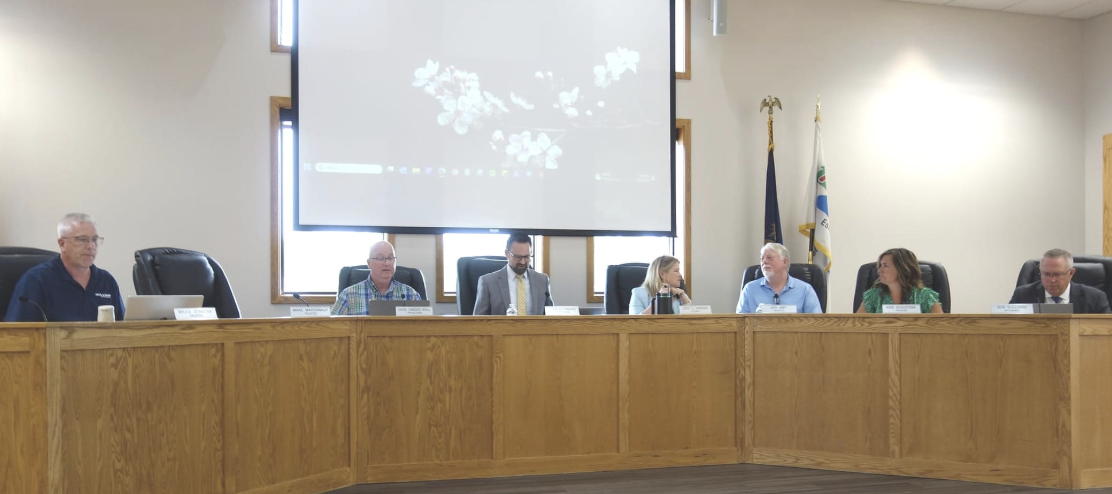
The Lowell Township Planning Commission initially planned to hold a public hearing on the project Dec. 8. Due to an overflowed crowd showing up to the event, the township postponed the meeting, which was rescheduled for Jan. 12. Opponents of the data centers have also protested at the state capitol in Lansing, calling for construction plans to either be changed or canceled.
“There is a push for the development of these centers in the name of progress,” Locher said. “What (they) call progress is polluting waters, consuming an exorbitant amount of energy and changing local climates. For the life of me, I cannot understand the desire for this artificial system with capabilities of developing intelligence that surpasses our own, and to our own detriment.”
Some proponents of data centers have stated the return on investment outweighs potential environmental concerns. Microsoft claims construction will be done with the environment in mind, alongside attempts to mitigate water depletion.
Clare Dillon, a GVSU student, is disheartened by the possibility of Michigan’s ecosystem being affected.
“I can’t help but feel like priorities are completely skewed right now, and I hate the thought of Michigan’s lakes being central to it,” Dillon said. “I can only hope our elected officials are putting in the work to protect our environment from any harmful interference these new centers may cause.”