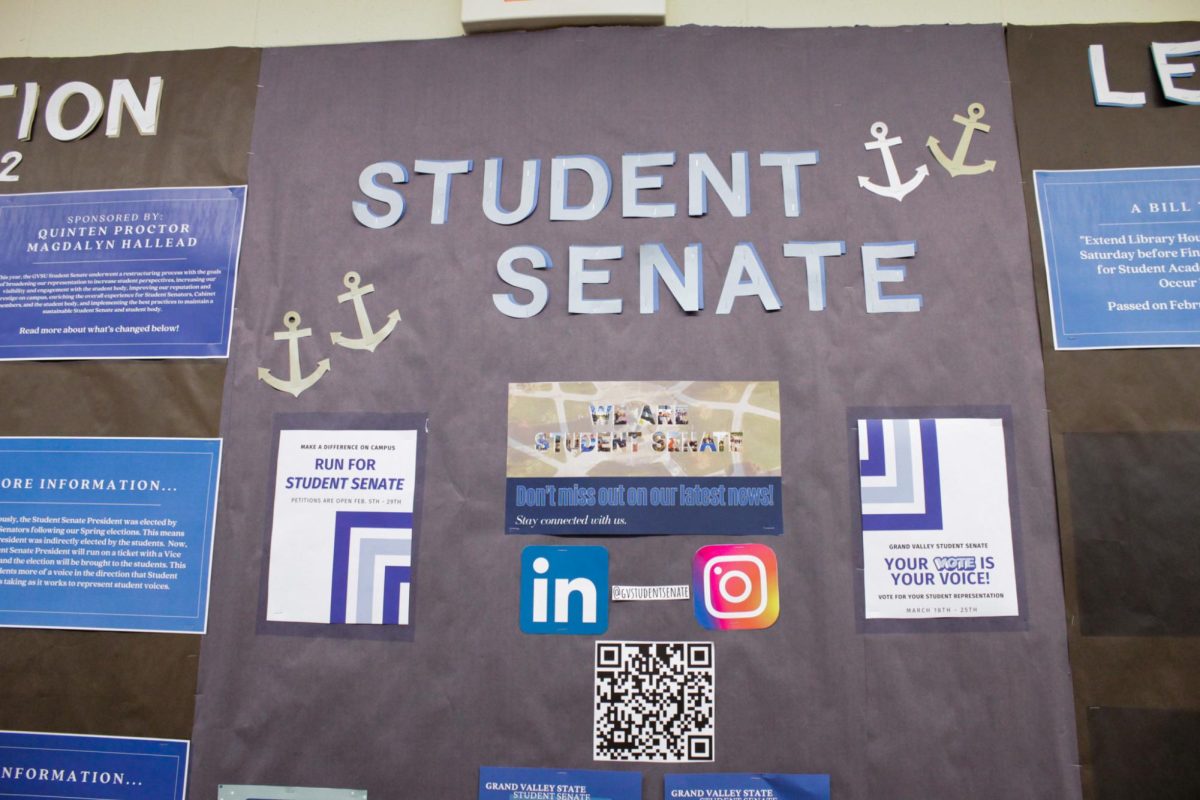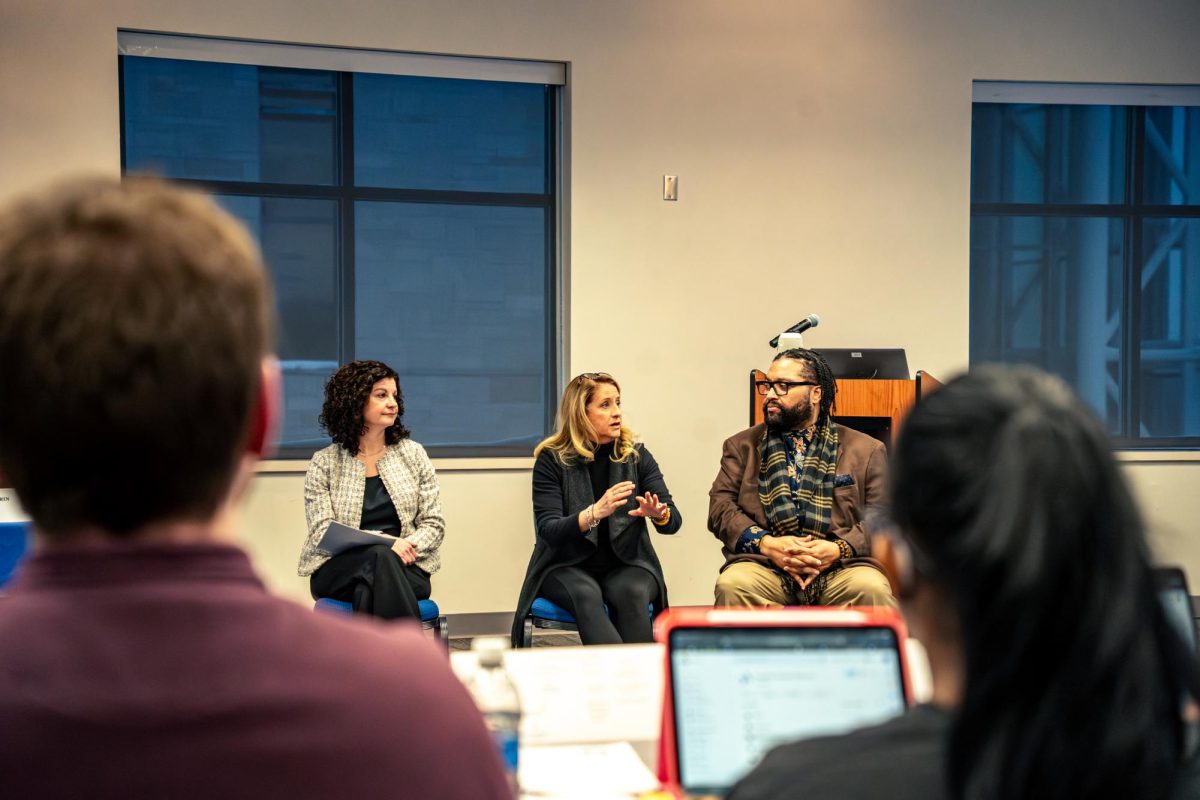



Student Senate held its second annual Student Solutions Summit Thursday evening, providing a space for students to bring their ideas to senators, and to create plans together.
Senate President Evan Jackson opened the event stating why he values student input in the decision-making process. He explained how the minor annoyance of forgetting his student ID at home turned into a bill to digitize student IDs. Students came to the summit with a variety of issues in mind, such as wanting on-campus bottle return, more parking spaces and longer library hours. Others attended to learn how to start organizations, seek out avenues of support and eat free pizza.
While students can voice concerns to the senate throughout the year and at General Assembly meetings, senators recognized that doing so isn’t always the most welcoming. They went on to create the summit, allowing students to pitch ideas and connect with student governance in the process.

“Public comment is sometimes very formal,” said Senate Vice President Ty Vanlerberghe. “This (summit) provides a casual environment where they (students) can freely speak to our members, come up with creative solutions and really hash out ideas aside from those super formal meetings.”
The summit has grown significantly since last year, filling a banquet room in the Russel H. Kirkhof Center. This may be indicative of an increasing presence of the senate within the broader student body.
“Our body has really grown, (as well as) the awareness that we have on campus,” Vanlerberghe said. “I think that speaks to our leadership and our entire body’s mindset. We really want to get out and engage with the community.”
Ian McGuckin, president of Grand Valley State University’s Amnesty International chapter, attended the summit to converse with senators about strategies to protect human rights among the campus community.
“It’s hard to effect change immediately, so we’re still strategizing and discussing,” McGuckin said. “I’ve definitely grown in my confidence of the support there is among the student body for protecting all of our civic and human rights.”
The summit concluded with students sharing possible solutions to everyone in attendance, and leaving notes with senators so ideas can be put into action. The senate’s Public Relations Chair Sophie Gemmen said she’s excited to see how solutions can be grappled with, and that the summit helps senators generate conversation.
“I think there is no idea too small or big to bring to Student Senate,” said Gemmen. “It’s just a matter of figuring out how it fits into the scope of our position on campus and who we need to talk to next about it.”
Vanlerberghe encouraged students to be in communication with the senate beyond the summit. He iterated students can submit a request to the senate, talk to senators while they’re tabling or visit their office in Kirkhof 0008.
“We don’t want an event to be the only time someone interacts with Student Senate,” Vanlerberghe said. “We want them to use this as a resource and keep coming back to us with ideas, issues and solutions.”