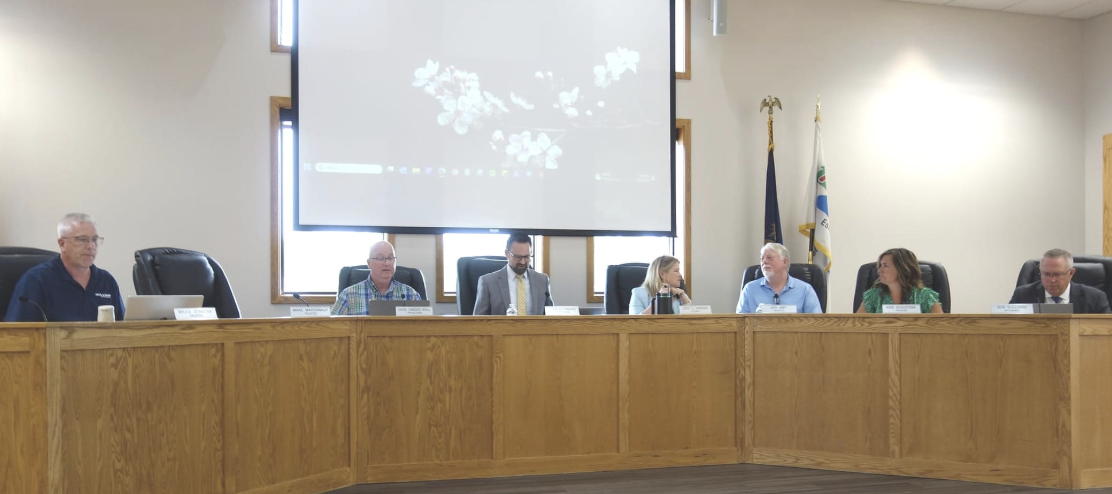



The Padnos/Sarosik Center for Civil Discourse hosted an interactive “Families and Politics” workshop last Wednesday, offering attendees insight and strategies into navigating interfamilial political difference.
The event was facilitated by the volunteer organization Braver Angels, which aims to bridge partisan divides through civil discourse. While participants came from diverse backgrounds and conveyed different reasons for attending, many attendees were united in their value for respectful political discussion among their families.
The first activity of the event asked attendees why they found such conversations important. Participants shared advice to understand other perspectives and help each other have a fuller picture when it comes to receiving information. One guest wondered how attendees could talk to others about politics if they couldn’t talk to their own family.
Lisa Perhamus, director of the Padnos/Sarosik Center for Civil Discourse, shared the importance of learning how to have civil conversations with family members about politics.
“At this time in our country’s history, we’re having significant differences and divides, and I’ve been hearing from students it’s difficult to have conversations even in their own families, so this is the center’s response to what students have been saying is on their heart and mind,” Perhamus said.
The next part of the workshop outlined six different roles that family members could play in political discussions. The goal was to learn how to play the “engager” role that “tries to have respectful conversations across differences” through a series of exercises and reflection. Some participants noticed they tend to stay out of political conversations, playing the “bystander” role. Others establish political arguments, playing the “gladiator” role. Another said attendee said they attempt the “peacekeeper” role, bridging gaps between relatives’ political beliefs.
Before practical exercises, the workshop shared strategies and important reminders when dealing with differences in families, including remembering that you cannot change someone’s personal experiences. In addition, the event discussed the burden or shared history and the importance of knowing one’s boundaries when choosing whether or not to engage in conversation. According to the Braver Angels’ Participant Guide, when people change their beliefs, it’s not from a loved one trying to convince them. Change happens as an individual absorbs influence over time.
Attendees practiced engagement in political discussion using Braver Angels’ “LAPP skills,” which include listening, acknowledging, agreeing, pivoting and perspective. Many participants focused on sharing their own perspective and opinions, taking time to adjust to the “acknowledge” and “agree” parts of the acronym.
Liz English, the Kaufman Interfaith Institute’s campus program manager, recognized the difficulty of learning skills that might feel unnatural at times.
“(Learning new skills is like training) a muscle,” said English. “You’ve got to practice to have these types of hard conversations.”
English expressed appreciation for the workshop and new skills participants walked away with.
“It’s a wonderful training, it gave me some very tangible strategies to take away and put into practice with my own family,” English said. “It showed me I’m not alone in wanting to bridge gaps and reach across difference in that way. It was great to see a room full of students, staff and community members all in one place doing that work.”
The Padnos/Sarosik Center for Civil Discourse has numerous upcoming events focused on social and political issues.