

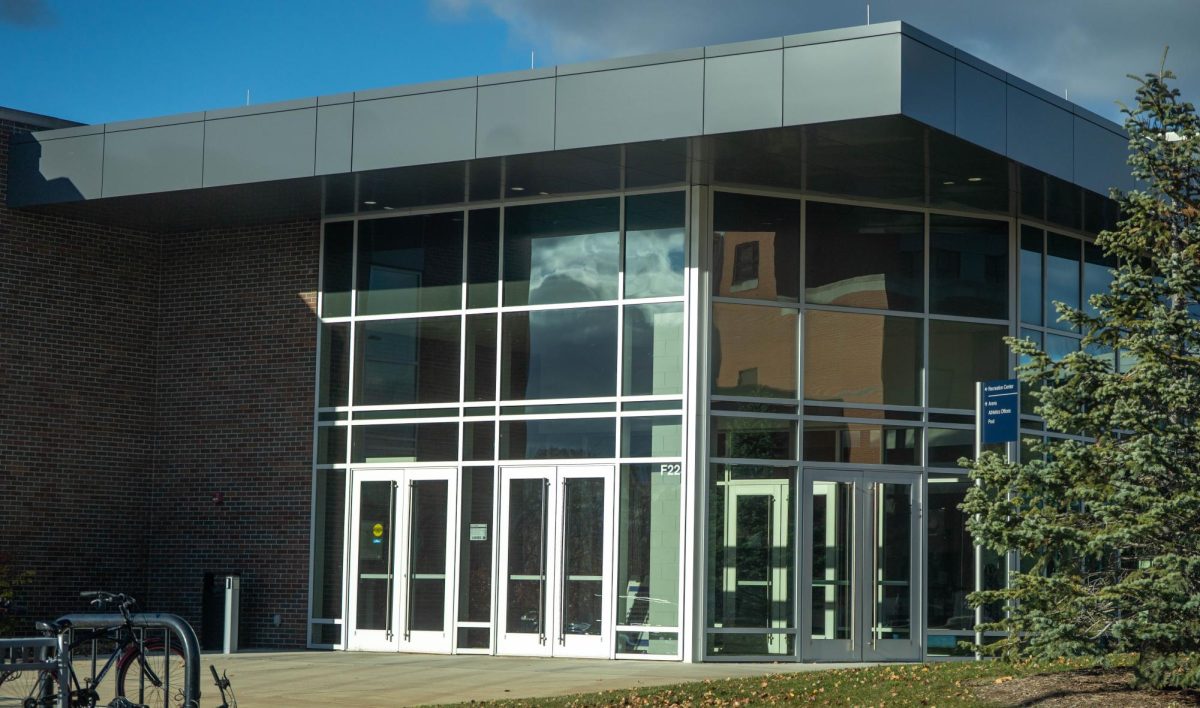
Grand Valley State University is continuing to renovate the Recreation Center, with updates to equipment and functional training expected into 2026.
The coming renovations, part of a longstanding project, are expected to start in 2026, and will include indoor turf zones, more plate-loaded strength options, portable benches and multi-use cable systems. GVSU is also experimenting with the idea of adding more collaborative exercise opportunities, such as group cycling, and may include additional student lounge spaces.
The changes are in direct response to results from a 2024 facilities survey, in addition to a study conducted earlier this year. Both captured feedback from students, faculty, staff, alumni and community members about the types of equipment and experiences they value most at the center.
Assistant Athletic Director Peter Bryant explained the mission of the renovations.
“The Rec Center renovation is rooted in a desire to create a welcoming, versatile and forward-thinking environment that reflects the needs of GVSU’s diverse user base,” said Bryant. “With over 400,000 annual facility scans (entries into the building), comparable to universities twice GVSU’s size, these updates ensure the Rec Center remains a top-tier environment that meets the evolving needs of the campus community.”
Recreation & Wellness has been working closely with Matrix Fitness and TechnoGym to provide students with up-to-date amenities and inclusive spaces. According to Director of Recreation & Wellness Aaron Mowen, other motivations behind the renovations are to aid in requirement and retention. This is to be achieved by matching, or even exceeding, the standards of other Rec Centers at different universities across the state, as well as local YMCAs. Additionally, Mowen explained that as high school gymnasiums continue to improve, incoming students expect a certain degree of quality, which universities must maintain.
“There’s a standard that students expect,” said Mowen. “It used to be where high schools looked at colleges to see what they were doing. Now, we are looking back at (what) high schools are doing. (We look at what) the student has already experienced in high school, and we have to match that or give them a better experience.”
These renovations are part of a three-phase plan, which started in 2024. Phase one of the multi-year project began in late 2024 with the installation of TechnoGym cardio equipment and a redesigned main floor layout that blends traditional cardio options with strength and functional training spaces. Additionally, during the first phase of renovations, outdated equipment nearing the end of its lifespan was replaced with newer models. The Rec Center also saw the addition of more inclusive workout spaces with equipment that is compliant with the Americans with Disabilities Act.
Phase two, completed this fall, focused on renovating the lower-level free weight area. In partnership with Matrix Fitness, the Rec Center introduced custom-branded GVSU equipment. The expansion increased the number of half racks and full-power racks, along with 13 plate-loaded strength machines, upgrading them to withstand heavy use.
Both Mowen and Byrant reassured that student accessibility will continue to be part of the renovations, with the addition of more spaces that offer different types of workout equipment within close proximity. These spaces would allow students with disabilities to do cardio, strength training and other workout activities without needing to travel to multiple floors in the Rec Center.
“These enhancements are designed to support both individual users and small-group training sessions, encouraging creative workouts and circuit-style training,” Bryant said. “As with all previous phases, accessibility and inclusivity remain central to the design. We want all Lakers to feel welcome and supported in their fitness journey.”
The new phase of renovations may also include student lounge and multifunctional spaces throughout the facility. The areas being explored will provide comfortable environments for students to gather, study or relax while waiting for group fitness classes, personal training sessions or intramural events. Some of these flexible-use spaces will be located on both the main and lower levels, reflecting the center’s aims to building community within recreational settings.