


Editorials
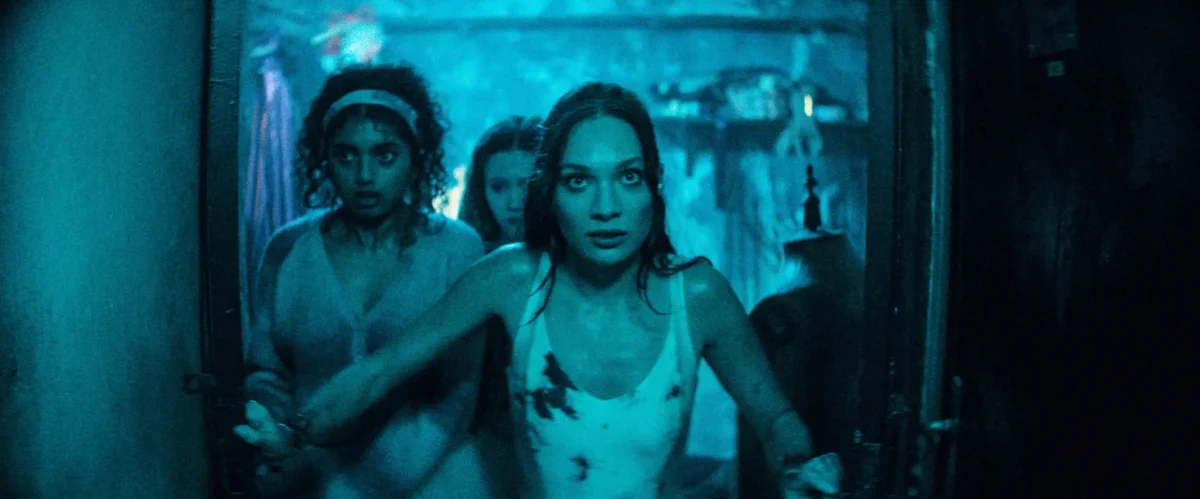
BRAKING: Parking on campus still sucks
As we enter a new academic year, students at Grand Valley State University are once again experiencing the age-old grievance that is on-campus parking.
To park on campus without being issued a $35 ticket, your vehicle must have a valid permit from

GVSU. While faculty members are issued passes, students must purchase them, costing between $150 and $240 a semester. However, students routinely struggle to find accessible parking on campus, which often results in having to park multiple lots away from their destination. This can add stress to students’ lives and cause late arrivals to class. Considering the steep price for parking, we think GVSU should massively improve its parking resources and accessibility for paying students.
Over the summer, Lot G underwent construction to modify the barrier between faculty and student commuter parking. Faculty do not pay for their permits, and are allowed access to student commuter lots, in addition to faculty spaces. The allocation of funds toward this project is a disappointing display of the University catering solely to the needs of faculty and staff, while not addressing the concerns of students who already pay exorbitant tuition prices.
To read more of the Lanthorn staff’s editorial on the parking problem at GVSU, click here.
Like it or not, Bad Bunny will hop onto the Super Bowl stage
As football season kicks into high gear, many fans look forward to the Super Bowl for reasons beyond the sport. Between anticipated advertisements and a high-energy halftime show, fans of football and entertainment alike have something to look forward to. This season’s halftime headliner announcement, Bad Bunny, has sparked controversy among fans of the NFL regarding the performer’s bilingual lyrics, audience and political messaging. However, we believe Bad Bunny, also known as Benito Antonio Martínez Ocasio, is not only a reasonable pick but the right choice for this year’s halftime performance. In light of the current political climate of
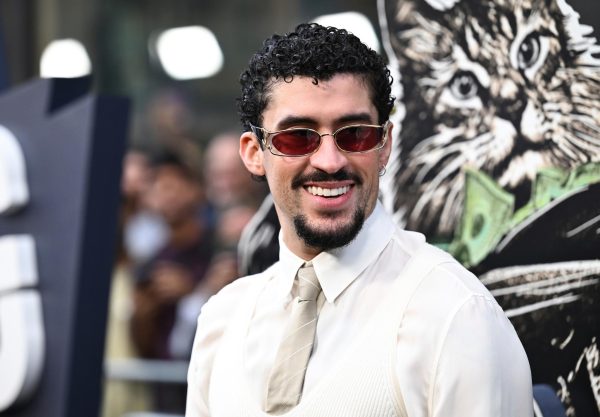
intolerance and anti-immigration ideology, Bad Bunny has the potential to make a real political and cultural impact, using performance elements to stretch the meaning of his songs far beyond their musical content.
Bad Bunny, a Puerto Rican artist, has made immense waves in the reggaeton industry. He was named Spotify’s top artist three years in a row, a feat unachieved by any other artist. This acclaim has brought reggaeton to the mainstream, diversifying the popular music scene. With more than 100 billion streams globally, his musical and cultural impact is undeniable. The reasoning for choosing a Spanish-speaking performer also has local impacts, as California — the location of the 2026 Super Bowl — has the highest population of Spanish speakers in the country. If the NFL’s goal is to reach the widest range of worldwide viewers possible, Bad Bunny is an obvious choice.
To read more of the Lanthorn staff’s editorial on the upcoming Super Bowl halftime performance, click here.
President Trump needs to SNAP out of it
On Halloween night, President Donald Trump hosted a lavish Great Gatsby-themed party at Mar-a-Lago, complete with dazzling 1920s attire, flapper-dressed hosts and dance performances. Beginning only hours before many Americans were set to lose Supplemental Nutrition Assistance Program (SNAP) funding, also known as “food stamps,” the demonstration of exorbitant wealth is a slap in the face to those struggling to make ends meet.

For struggling communities, SNAP provides resources to alleviate food insecurity. SNAP only covers eligible food items, which do not include things like alcohol, tobacco products, household items, health items and pet care. Averaging just a few dollars per person a day, the program helps Americans facing poverty by giving them the resources they need to afford food for their families. The program is a necessity for countless individuals as food costs, along with wealth disparities, continue to rise.
To read more of the Lanthorn staff’s editorial on President Trump’s party amid the SNAP crisis, click here.
Reviews
“Man’s Best Friend” is a witty take on female sexuality, relationships
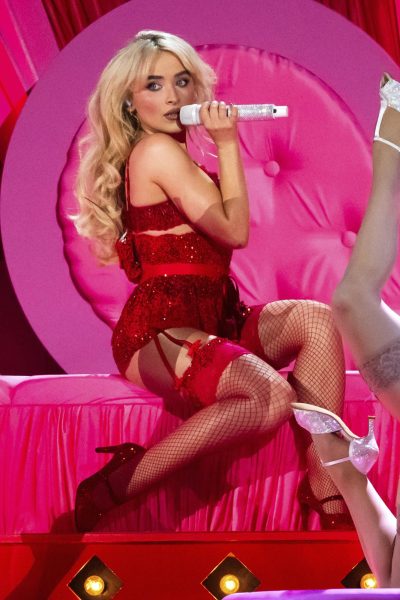
Sabrina Carpenter’s latest studio album, “Man’s Best Friend,” released this August, and has stirred controversy over both its cover art and lyrical content.
Some have argued the album’s cover, showing Carpenter kneeling with a man’s hand in her hair, caters to the male gaze, while others have viewed it as an expression of female sexual empowerment. While the debate has been a hot topic, I’d found myself wondering about the songs themselves. By listening to them, I gained a much clearer picture.
This album, Carpenter’s seventh full-length record, features two distinct moods. One side is about a breakup– the relationship is over and Carpenter’s wounds feel fresh. Songs like “Manchild,” the single many of us are already familiar with, and “We Almost Broke Up Again Last Night” are perfect for post-breakup listening with friends. The former track has more angry, he messed up, I hate him energy, whereas “We Almost Broke Up Again Last Night” leans into the sadness and exhaustion of a toxic relationship. “Tears” is a must-hear for date night, and a little further down the tracklist, “Never Getting Laid” sounds like wishing your ex a happy life through gritted teeth and clenched fists.
To read more of Kaylee Schwander’s review of “Man’s Best Friend,” click here.
Reviving Shelley: A new vision of ‘Frankenstein’
“Frankenstein” released Nov. 7 on Netflix, although the film officially premiered in theaters this October. The film, directed by gothic director Guillermo del Toro, is an adaptation of the cautionary tale about what happens when men try to play God and ultimately, obsession takes over. Set in the 18th century across Europe and England, “Frankenstein” has been a film Toro desired to create his entire career. Now that he has, it’s clear how much love was poured into the project.
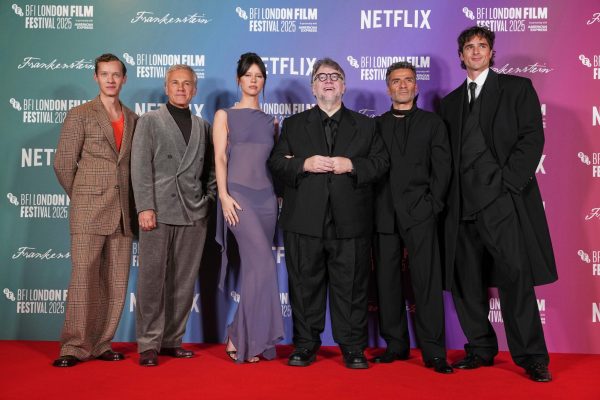
The adaptation stars Oscar Isaac as Victor Frankenstein and Jacob Elordi as the Creature, along with Felix Kammerer as William Frankenstein and Mia Goth playing both Frankenstein’s mother and Elizabeth Lavenza, William’s fiancée. The movie begins in the Arctic, a vast, frozen land, immediately setting the film’s tone. The story unfolds in two parts, first through Victor’s perspective before shifting to the Creature’s.
Although labeled as a “horror film,” the adaptation feels more like a gothic drama. There are certainly horror elements, but it’s not what you’d think of when you picture a horror movie. The film was approached with a clear respect for Mary Shelley’s 1818 novel. The Creature isn’t necessarily meant to be terrifying; he’s meant to be as beautiful as he can be. Watching the film, it’s clear how much everyone involved cared for this project and wanted to do the classic story justice.
To read more of Kaylee Schwander’s review of “Frankenstein,” click here.
“Superman” rekindles magic, soars into uncharted action
Throughout the years, viewers have seen many adaptations of “Superman,” from the original comics and television series to animated shows and several live-action films.
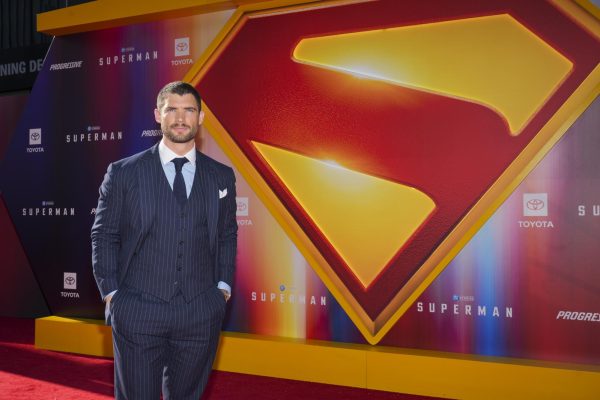
This summer brought another take on the iconic superhero, courtesy of writer-director James Gunn, a veteran of the superhero genre.
The latest version isn’t just a reboot of “Superman,” it also launched the new DC Universe, along with several new faces. The vast cast includes David Corenswet as Clark Kent/Superman, Rachel Brosnahan as Lois Lane and Nicholas Hoult as Lex Luthor. With the large amount of characters, the film might seem overwhelming, however, each individual is given time to stand out in their own way. Performances are strong throughout the film, and I’d like to add a special mention of Alan Tudyk, who plays Robot #4 and the adorable, CGI dog Krypto.
This adaptation takes a different approach from previous versions, and in the best possible way. Many versions of the film begin with Clark, as a baby, landing on Earth, or we see him starting at the Daily Planet, the news company where he works as a journalist. This version quickly moves through a timeline of major events before the story really even begins. It is a nice change of pace, and suggests that filmmakers trust the audience to know major plot points already, without needing to be spoon-fed. “Superman” starts in the middle of a battle, allowing viewers to focus on the action and story itself rather than Kent’s already well-known origins.
To read more of Kaylee Schwander’s review of “Superman,” click here.
Columns
American Eagle’s jeans advertisement capitalizes on harmful rhetoric
American Eagle’s new denim advertisement, featuring actress Sydney Sweeney, has stirred up controversy by seemingly referencing eugenics in its messaging. Viewers of the ad have questioned why the company chose to feature a blonde-haired, blue-eyed woman to declare how great her “jeans/genes” are. To me, the timing of this commercial is no coincidence– there’s a whole lot of hate in America right now, and there’s no doubt in my mind that advertisements like this are simply adding fuel to the fire.
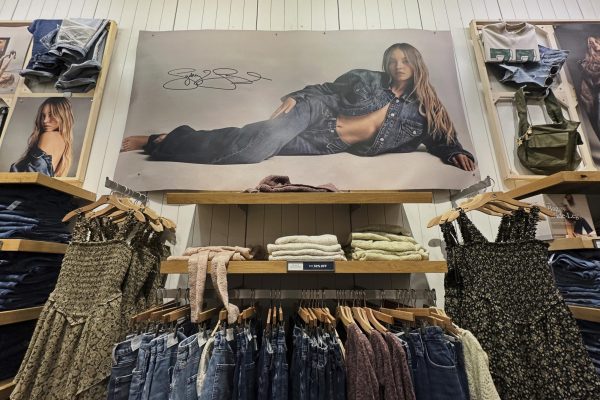
The video that has ignited discussion stars Sweeney, wearing the brand’s most recent jean collection, as the camera fixates on her body. Her voice echoes over the footage, stating, “genes are passed down from parents to offspring, often determining traits like hair color, personality and even eye color. My jeans are blue.”
At first, Sweeney’s “great jeans” advertisement didn’t mean much to me. I initially deemed the ad more so confusing rather than offensive. I didn’t think the wordplay between “genes” and “jeans” worked, but now, I’ve decided the issue goes much deeper than what I thought was weak writing. The ad capitalizes on the same hate and insensitive language being directed toward marginalized groups across the country. Perhaps if the American Eagle commercial included a blurb about how jeans can be catered to each individual, similar to how our genetic makeup is unique to our individual selves, the ad would’ve been clearer in its mission to advertise “great jeans.”
To read more of Gabrielle Ray’s column on American Eagle’s jean advertisement, click here.
“Rocky Horror” is more than a film, it’s queer liberation
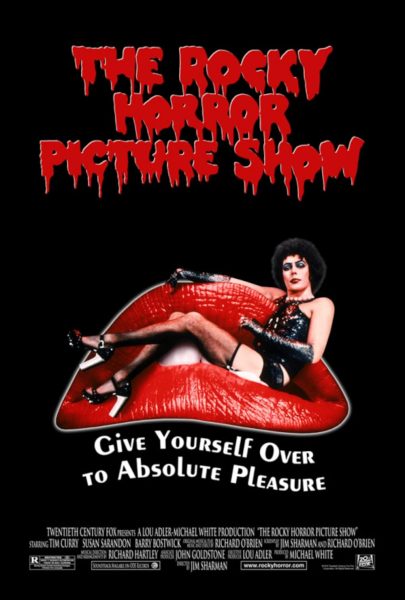
I had the joy of attending the Campus Activities Board’s showing of “The Rocky Horror Picture Show” Oct. 11. After a night of rice slinging, newspaper hat-wearing and profanity-shouting fun, it’s no wonder that Lou Adler’s take on the B-movie horror genre has become such an enduring cult classic and Halloween staple.
The cult following for this movie is unlike anything I’ve seen, even as someone familiar with many other cult fandoms. As anyone who has been to a “Rocky Horror” screening can tell you, it is different than most film experiences out there. At my screening, about half of attendees were clearly seasoned “Rocky Horror” veterans, and it didn’t take long for the callbacks to start.
For those who are not aware, a “Rocky Horror” show is far more than simply sitting down and watching the movie. Almost from the start of its several-decades-long run in theaters, callbacks were established among the fandom. While all of us newbies were caught off guard at first, it didn’t take long for us all to join in and pick up the new songs and lines along the way; that is the beauty of a “Rocky Horror” screening. More than being a simple showing, it is a community experience where everyone takes part in the fun.
To read more of Jace Perroud’s column on “Rocky Horror,” click here.
Trinkets, blind boxes and the price of inner-child consumerism
When I first came across Sonny Angels, tiny, collectible cherubs with themed-headgear and accessories, I was left wondering many questions, including where is their clothing? Like many others that pay attention to pop-cultural trends, I was perplexed by the allure of blind-box trinkets that never seemed to stay on store shelves. Since then, the list of trinket characters, both new and reinvented, has grown immensely, with figurines adorning a vast amount of purses, backpacks and display cases. Yet, these cherished characters represent overarching themes of American culture and society: consumerism and environmental waste.
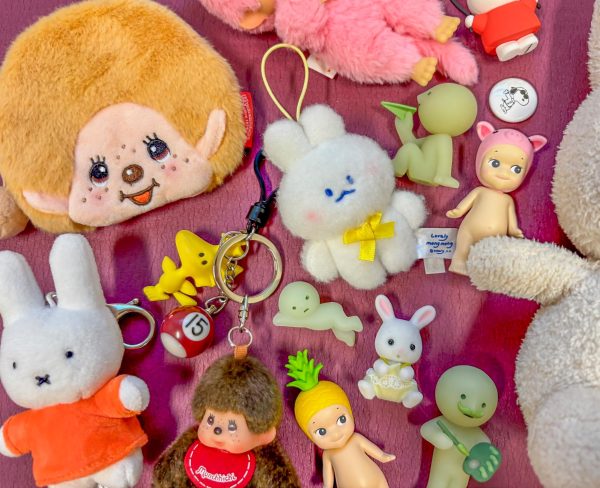
Sonny Angels dawned on the internet in 2023, despite being created by the Japanese toy designer Toru Soeya in 2004. The little cherubs with strawberries or fawn ears on their heads were just the tip of the iceberg. Since then, it’s felt as if every week a new character has entered the “trinket arena,” with Smiskis, Calico Critters, Miffy, Monchhichi, Snoopy and most recently, Labubu. Whether the figurine takes the shape of the contemporary, green-glowing Smiski or nostalgic, cartoon Miffy, many collectors feel wistful sensations akin to reminiscence and sentimentality toward their youth. This, in a sense, was part of why Sonny Angels were designed– to provide comfort to working-class Japanese women during a nationwide financial crisis.
To read more of Hailey Hentz’s column on our obsession with trinkets, click here.