

Last week, some of the most technically demanding performances in collegiate athletics unfolded on a single stage.
Grand Valley State University dancers and millions of viewers watched from the stands and their homes as collegiate teams competed in the UCA & UDA College Cheerleading and Dance Team National Championship. The championship concluded Jan. 18 after a three-day run at the ESPN Wide World of Sports Complex in Orlando, Florida. While not competing in Florida, dancers at GVSU diligently watched the performances and reflected on the championship’s personal significance to them.
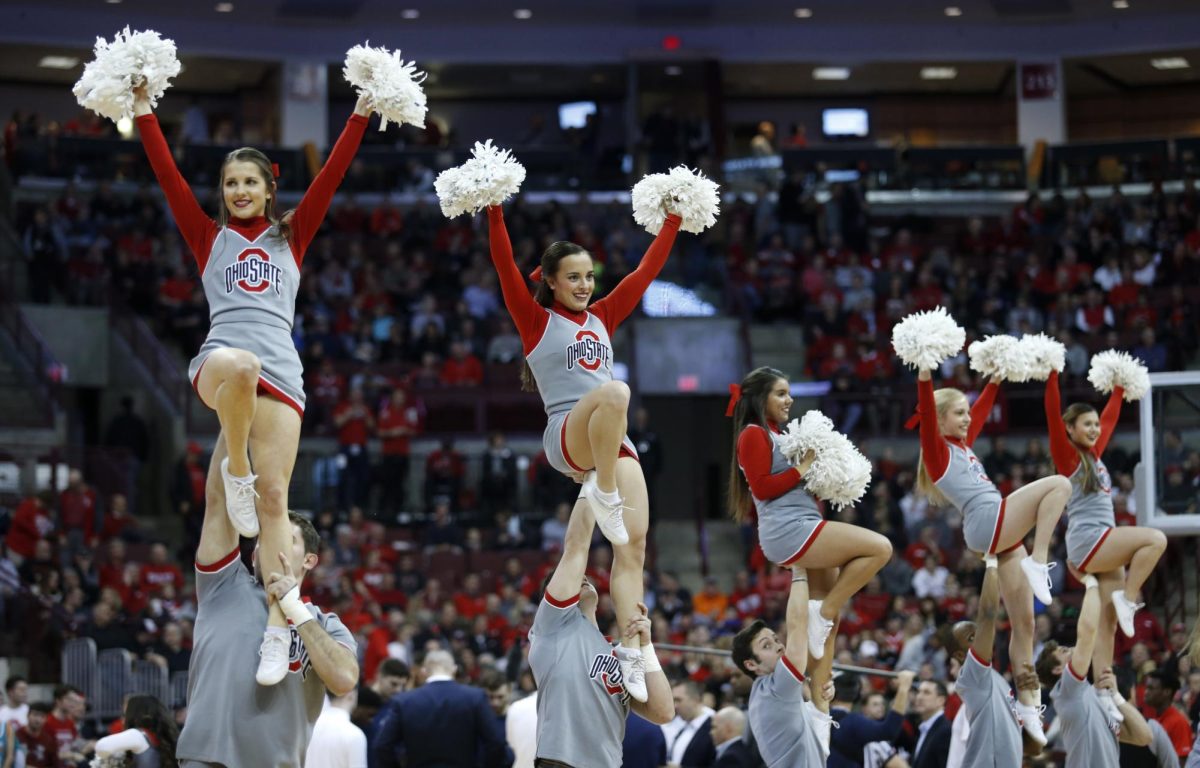
The event is split between two organizations: the Universal Cheerleaders Association (UCA), which oversees collegiate cheerleading divisions and the Universal Dance Association (UDA), which governs collegiate dance categories, including jazz, pom and hip-hop. In total, the annual championship unites top athletes from both sports in the highest level of national competition. The wide range in divisions allows the event to appeal to many.
Courtney Sabin, a fifth-year student at GVSU, has been dancing since she was three, and followed the events of the championship closely, along with her roommates and fellow dancers.
“I don’t think there really are regional competitions,” said Sabin. “This is really the only competition there is for college teams.”
The championship is judged on a combination of technical execution, synchronization, difficulty, creativity and overall performance quality, with judges scoring routines across multiple rounds to determine national rankings.
While UDA competitions have gained increased visibility on social media in recent years, UCA Nationals have remained a cornerstone of collegiate cheer. They feature high-difficulty stunts, synchronized tumbling and complex pyramids judged across multiple rounds. For dancers, UDA Nationals represents a singular competitive opportunity.
Alyssa Poppe, a senior and member of the GVSU Dance Team, said her familiarity with the championship began long before college.
“When I got to high school, I joined a high school dance team, and we competed at UDA for all four years,” Poppe said. “I’ve been to ESPN and I competed with them.”
Poppe added that she continues to follow the championship closely.
“I work for UDA as a staff member, so I’m very familiar with the rules, different competitions, teams that compete and how it all gets put together,” Poppe said.
Every year, dancers celebrate this competition as a community, even if they’re not competing in it.
“For finals day, (my friends and I) all met and we watched (it) from top to bottom, 8 a.m. to 4 p.m., until we got to see the final awards,” Poppe said.
Teams competing at UCA and UDA Nationals undergo months of preparation, beginning with highly selective tryouts and daily practices that refine choreography, formations and technical execution. While cheer and dance teams perform regularly at football and basketball games, the national event allows athletes to focus exclusively on competition.
“This is their team’s chance to really show off the more technical side of things and go all out, because it’s all about them,” Sabin said.
Several programs have drawn particular attention during this year’s UDA competition, including Ohio State University and Minnesota State University, Mankato. Sabin said the two teams are often compared, despite having distinct performance styles.
“Minnesota did something more emotional and emotionally charged, and then Ohio State does something more experimental and edgy,” Sabin said. “They’re both amazing schools, but they’re just so different that it’s hard to compare.”
The rise of social media has expanded the championship’s audience far beyond the competitive cheer and dance community. Clips from both UCA and UDA performances circulated widely online throughout the three-day event, fueling debates over scoring, execution and artistic choices. Sabin described the idea that exposure comes with added pressure for athletes.
“(There are) those star dancers where they’re basically celebrities,” Sabin said. “People know them by name, which is crazy because they’re just a college student who’s a really good dancer.”
Despite the focus on viral moments, Sabin emphasized that the championship’s significance extends beyond public reaction.
“I think it’s just a showcase of the best of the best, and what dancers are truly capable of,” Sabin said.
Though performances last only a few minutes, they reflect months of preparation and years of training, all condensed into one weekend on the sport’s biggest stage.