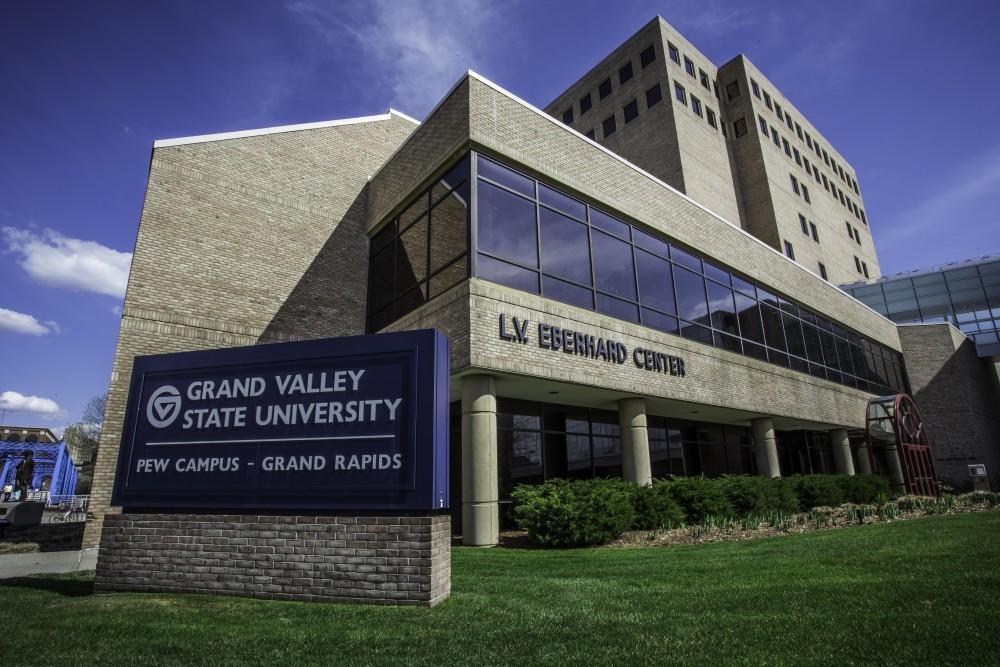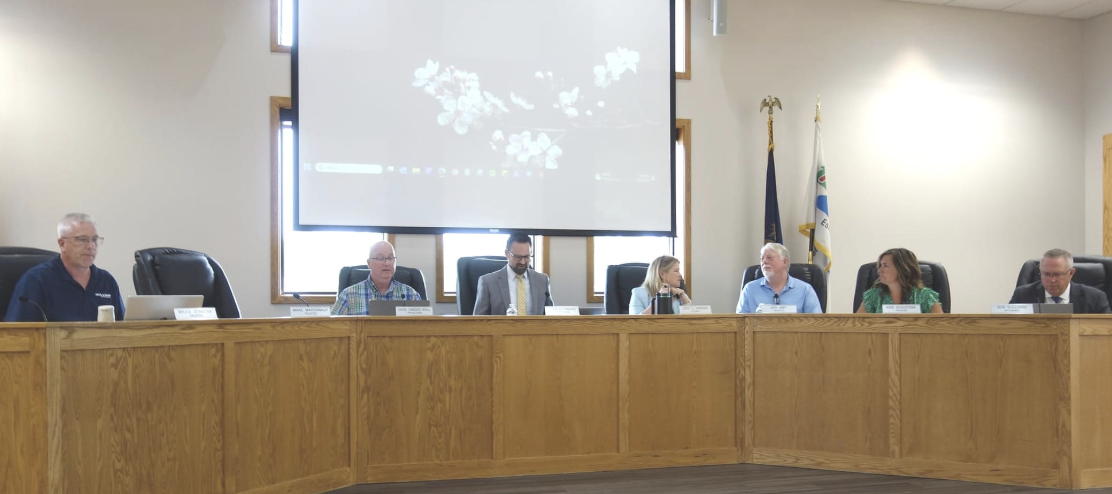



Grand Valley State University’s Board of Trustees (BOT) unanimously approved debt financing Friday, Feb. 6 for renovation of the L.V. Eberhard Center and the addition of a 58,000-square-foot tech center. The center, called Blue Dot Lab, is set to be completed in August 2028.
The resolutions approved a budget of $101.4 million for the L.V. Eberhard Center and $64.6 million for Blue Dot, sourced from donor funds and general revenue bonds. The BOT authorized the issuance of bonds up to $139 million. Faculty at the meeting raised concerns over the decision, while administrators fully embrace the application of new technologies, namely artificial intelligence.
Blue Dot was approved by the BOT in 2023 and will be added to the L.V. Eberhard Center on West Fulton Street. It will serve as the center for GVSU’s College of Computing, created in 2024. Last year, the college added programs in artificial intelligence and software engineering.
The University originally estimated the project to cost $140 million, with $30 million coming from state funding and $110 million funded by the school. GVSU received $30 million from a supplemental funding bill for the project in 2023, which still needs state action for construction authorization. The University received an additional $1.6 million last year through a state evergreen fund.
$106 million will go toward construction, with $30 million acting as a bridge loan while the University seeks donations. The Grand Valley University Foundation, GVSU’s fundraising arm, declined to provide a specific amount already raised for the center up to this point.
“At this time, we are not sharing details about the generous commitments donors have made to these projects thus far,” Vice President for Institutional Advancement Laura Aikens said.
University leadership says Blue Dot will have no impact on funding for other departments. Gregory Sanial, vice president for Finance and Administration stressed that GVSU frequently issues bonds to fund construction projects, and it should have no impact on the University’s credit rating.
Most recently in 2018, the Daniel and Pamella DeVos Center for Interprofessional Health was completed with a $44 million bond. At that point, the University was in the most debt in school history at $260 million. The school is currently $180 million in debt — the Blue Dot project will put the University well past that.
The renovation will also add numerous labs and studios to the center. Aikens says a “digital tech equity” center will serve to integrate new technologies across disciplines, beyond the College of Computing.
“The digital tech equity center is the brainchild of liberal arts professors who are identifying how our students can get the core competencies that they need, from a technological perspective,” Aikens said.
Some faculty members expressed concern over a more intensive integration of AI in their classrooms, where they have already seen negative impacts. Philosophy Professor Andrew Spear described AI as a harm to both educators and students during public comment.
“By funding, glorifying and prioritizing this technology, the University risks communicating to students the unimportance of what we have traditionally taught, while investing heavily in what may turn out to be a Silicon Valley bubble.”
English Professor Brian Deyo described the resolution as aggressive and concerning. He worries that if the University takes on too much debt it could create a budget crisis leading to cuts to the humanities.
“AI tends to militate against the mission, vision and values of liberal arts education, which has been under threat over the past several decades” Deyo said.
Deyo teaches a course on environmental literature, and sees numerous climate-related issues in the rapid increase in AI development.
“If colleges and universities like GVSU go all in on AI, you need the infrastructure to support that; data centers are being built up very rapidly,” Deyo said. “These infrastructure projects have implications for our ability to collectively adapt to the climate crisis that is distressing in the extreme.”
President Philomena Mantella, however, stressed proactive engagement with AI.
“You have to engage with it and learn trustworthy AI, and how to create the integrity around it,” Mantella said. “I don’t think we’re doing our educational responsibility unless we lean into the opportunities to do it right.”
Pending state authorization, construction will begin in May.