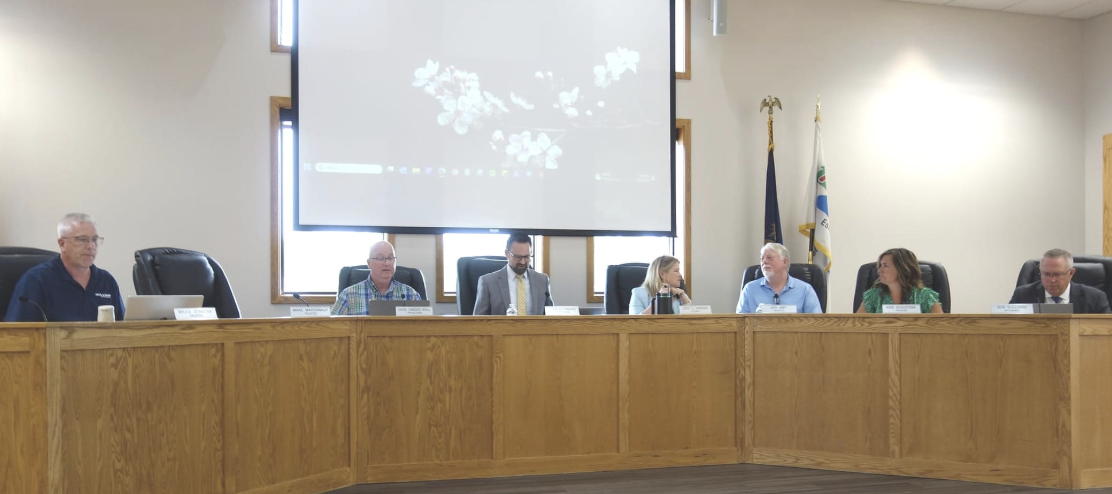



The University Academic Senate (UAS) has begun drafting a measure that would allow an official vote on their confidence in Grand Valley State University administrators, if necessary.
The measure, which is still being drafted, allows the UAS to bestow votes of confidence, no confidence and censure on the Senior Leadership Team (SLT). They could use this measure to express their displeasure with a decision or as a token of support.
Professor of Classics Charles Pazdernik co-authored the draft of the measure, emphasizing a need for this type of clear language whenever a formal process is proposed.
“The issue at hand is whether to adopt (new) language in the UAS bylaws,” Pazdernik said. “The language defines what the effect of such a vote would be and specifies procedures for conducting such a vote.”
Despite increased discussions surrounding such a measure, Pazdernik insisted there is no pressing need for such a vote at this time.
“In an academic context, votes of confidence, censure and no confidence are among the strongest measures that elected representatives of the faculty can take in order to express profound disagreement with (support for) decision making or conduct of university administrators,” Pazdernik said.
The proposal was previously discussed last academic year, but was never put on the agenda to be voted on.
“It’s been raised again now as an item of unfinished business, but to my knowledge the timing isn’t driven by a sense of urgency,” Pazdernik said.
Andrew Spear, philosophy department chair and UAS member, co-authored the measure alongside Pazdernik. He says there was significant discussion of a no-confidence vote during the 2024-2025 school year. However, the issue was resolved through Shared Leadership Workshops in May 2025 facilitated by faculty from other universities.
“There was some serious discussion of no-confidence actions at the University Academic Senate in fall 2024 and early winter 2025, but that action did not go forward,” Spear said. “Instead, I believe it is fair to say that after some tension, the senate worked to articulate its concerns in a series of task force reports, and then participated along with administration in Shared Leadership Workshops.”
After restoring an equilibrium between the UAS and SLT, the two parties moved forward in the goal of shared governance reform. Spear says faculty concern has reignited over the recent debt financing of BlueDot, an AI tech center being built on the City Campus.
“These efforts are ongoing, though there has been significant faculty concern about some recent decisions by administration,” Spear said.
Spear echoed Pazdernik’s points about the necessity of such a measure, saying the proposed bylaw language does not mean UAS is initiating a vote of no confidence, but rather establishes a safety net.
“I want to stress that establishing a clear process by which such a vote would happen is not at all the same as activating that process or seeking a vote of no confidence,” Spear said.
A bylaw change is technically not necessary for the UAS to hold a vote of no confidence or censure. However, Spear says it allows for consensus and fairness if the issue is ever raised.
“Having a process on file means it is more likely the body can find consensus one way or the other if the question ever comes up again,” Spear said. “It is also arguably fairer to any administrator who might be the target of a potential vote insofar as the bylaws are publicly available,”
Spear hopes the measure’s clear language will help foster cooperation and trust between the UAS and SLT.
“Shared governance in universities operates according to an implicit, and at times explicit, agreement concerning how decisions will be made and about deciding what is best for the university in various ways,” Spear said.