


Grand Valley State University silently left an independent labor organization earlier this year, raising concerns over the sourcing of university merchandise.
The Worker Rights Consortium (WRC) conducts independent investigations into working conditions factories worldwide. The organization partners with 154 colleges and universities to ensure labor standards behind university-branded merchandise. GVSU joined the consortium in 2001, shortly after the organization was founded. The University left the organization in January, and is the first higher-education institution in 15 years to do so. While some have speculated GVSU left the consortium in order to sell Nike products, a company notorious for sweatshop-labor allegations, administrators cited the cost of membership in why the University left.
Historically, there have been numerous labor scandals in Nike-affiliated factories. Since 2013, WRC has been investigating a the Hong Seng Knitting Co. in Bangkok, Thailand, where Nike is a key buyer. In 2024, Nike owed more than $900,000 in lost wages to Hong Seng workers, and according to a WRC timeline, Nike recently announced a remediation plan for workers’ lost wages. However, WRC still believes the plan proposed by Nike is not perfect. In specific, one Hong Seng worker was forced to flee Thailand after advocating for workers’ rights. The consortium claims compensation for this worker “remains grossly inadequate.”
Doug Wentworth, director of Auxiliary Services, explained GVSU started selling Nike products based on the request of students. He claimed the decision to sell Nike products at the Laker Store was made in spring 2024, while administrators made the decision to leave WRC in September 2024. Wentworth claimed the University did not renew membership in the consortium because of cost, not the selling of Nike merchandise.
“We will continue to evaluate the cost (and) value of membership with WRC, and may rejoin in the future,” Wentworth stated. “We still hold the same values we had as members of WRC and our purchasing guidelines have not changed.”
Membership fees for the University to be in WRC increased from $1,600 to approximately $2,500-3,000, which prompted them to leave. The Laker Store pays such fees with money from sales, and does not receive funding from tuition. According to Wentworth, operating costs to the Laker Store have increased while revenue has decreased and staff has also been reduced.
Eric Johnson, a junior involved with Students for International Labor Solidarity (SILS), found out about GVSU ending its membership after attending a meeting hosted by SILS staff organizer Giselle Cervantes. Cervantes visited GVSU in order to speak with students about what WRC is and importance of monitoring labor conditions. While Johnson acknowledged membership cost is a considerable factor, he believes moral and ethical implications outweigh the price increase.
“The reason I am not overly concerned with the cost of WRC membership is because it’s $3,000 for an institution of immensely privileged people (to support) some of the hardest-working people in the world who will never know what a million dollars looks like,” Johnson said.
This issue of labor rights is very personal to Johnson. Last summer, he traveled to Honduras, where he met with workers and saw the inhumane conditions that workers are forced to endure.
“I met one person who broke his leg in a car crash, and his position at the factory required him to stand all day long,” said Johnson. “(The worker) asked his manager if he could move, and he couldn’t move to a position where he wasn’t standing, so he had to quit his job or suffer.”
WRC Deputy Director for Strategy and Field Operations Jessica Champagne stated the consortium has “deeply valued” the University’s membership, and acknowledged that many universities, not just GVSU, are currently struggling financially.
Champagne highlighted some of the work WRC does with universities. In June, the consortium won reinstatement for a Salvadoran woman fired in retaliation for reporting sexual harassment. WRC also recovered more than $750,000 in wages stolen from workers in Haiti, and helped people in Indonesia and Central America return to their jobs after being fired for speaking on workplace issues.
“All of these workers were producing collegiate-logo apparel like that sold at the Laker Store,” Champagne said.
She further explained the impact WRC has not just on workers, but for individual universities.
“WRC offers colleges and universities an opportunity to embed their values in their licensing and merchandising programs,” Champagne said. “While no individual school alone can address the challenge of collegiate apparel tainted by exploitation, joining WRC creates an opportunity for the university community to be part of global efforts to address the widespread rights violations affecting workers around the world who produce logo products.”
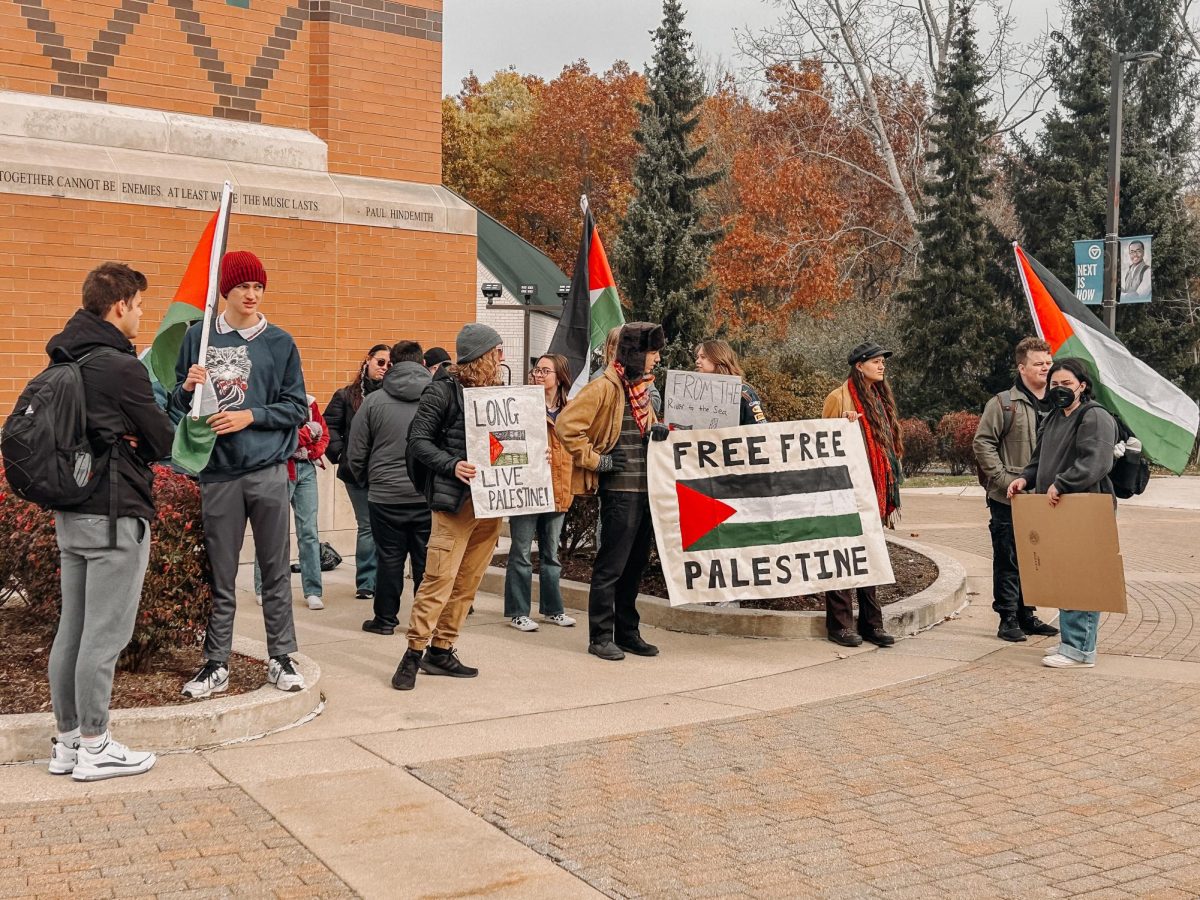
Johnson is continuing to advocate for the University to rejoin WRC. He hopes members of the student body will join together to convince administrators to rejoin the consortium. He believes if the decision to sell Nike was because of student demand, rejoining WRC can be achieved in the same way.
“It would be a bit of a fight,” Johnson explained. “(It would be harder) than getting them to sell a popular brand, but I think it could work.”