

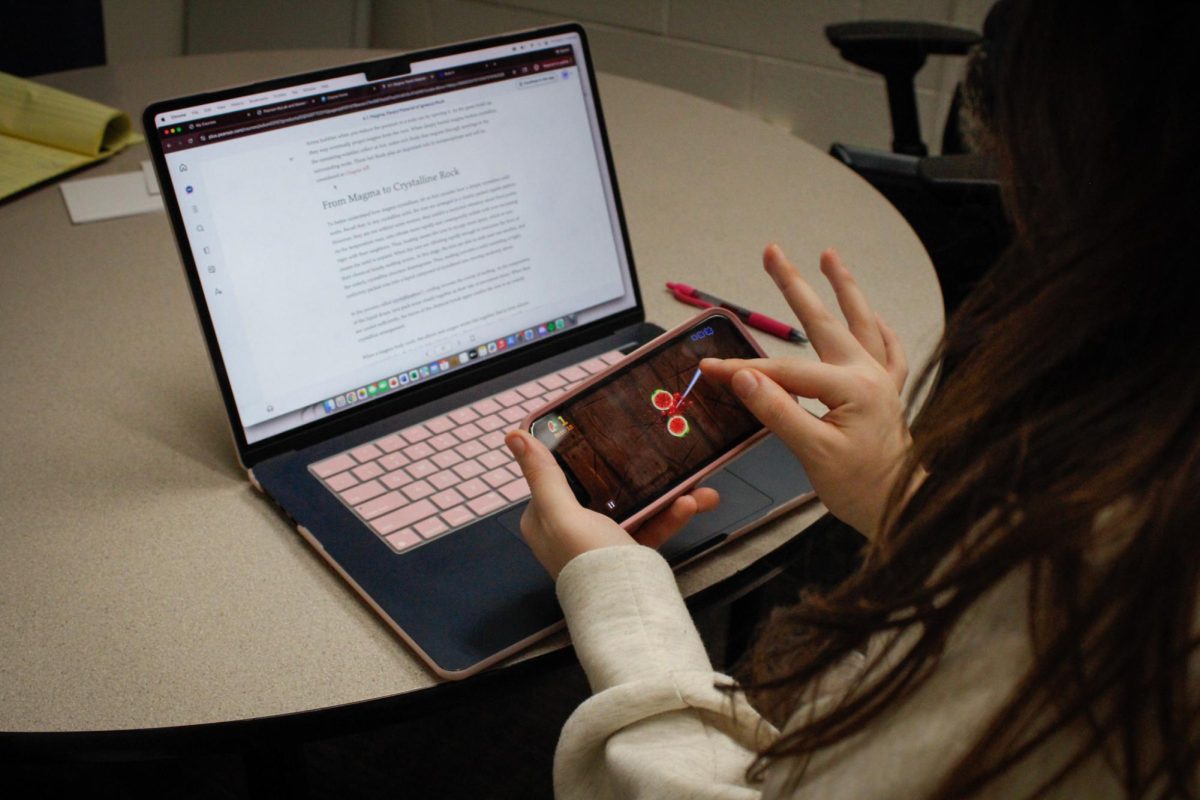
Among the many issues expected to cross Michigan Governor Gretchen Whitmer’s desk is a bill meant to limit the use of cell phones in classrooms. The proposal would require schools statewide to place limits on cell phone usage in schools, while still allowing districts to decide how extensive the ban will be.
The baseline of the legislation is that cell phones should be banned during instruction times in Michigan schools, except in specific cases such as use for academic reasons or in emergency situations. Outside of instructional periods, districts can choose whether or not phones are allowed on school grounds, a power districts largely had before this bill.
This is a compromise between Michigan Republicans, who wished to impose a sweeping ban across the state, and Democrats, who wanted to leave these solutions to the school districts themselves. Many of the Republicans who were pushing for a statewide ban on the devices in classrooms are unhappy with the bill giving individual districts some leniency.
My issue with these bills doesn’t really have much to do with the restriction of cell phone usage itself in classrooms. There are plenty of districts across the state that already enforce similar restrictions, which is within the bounds of authority given to schools in Michigan. Cell phones are absolutely a hindrance to classroom engagement and discussion, and schools placing these restrictions make perfect sense. This bill gives districts something concrete to point to if they face pushback from students or parents. When a policy is backed by state law, it can be easier for administrators and teachers to justify enforcement.
While this bill has drawn out opinions on the usage and availabilty of cell phones in the classroom, this topic as a whole is backseat to other issues that have more dirrect affects on students and their families.
My larger concern is the pattern of state-level involvement from lawmakers who have not consistently supported public education. Repeated efforts to reduce funding, limit resources and challenge curricula clearly show that schools are political talking points more than genuine priorities for Michigan Republicans.
It’s interesting to see how much urgency some Republicans have placed on this issue despite supporting efforts that have reduced funding for free school lunch programs and stripping funding for schools teaching curricula they oppose. It feels contradictory to claim concern about students’ wellbeing while backing policies that make it harder for schools and families to meet their basic needs.
Calls for stronger control over how schools operate come across less like support for education and more like a desire to shape schools around political beliefs. State Republicans are so concerned with this issue that they want to impose sweeping bans and legislation on districts when they have little to no experience actually running schools.
I have to wonder how much care they have for the development of Michigan children when they seek to unleash ICE agents across the state and in sanctuary cities, potentially separating families. That, more than the cell phone debate itself, is what stands out to me.