


Editorial revision 03/13 – This story has been updated to better reflect communication with University leadership as this story develops.
Faculty members delivered an open letter to Grand Valley State University’s Board of Trustees Friday, March 6. The letter, signed by hundreds of students, faculty and staff, voiced dissatisfaction over certain University initiatives, and what many deem a lack of communication between shared governance bodies.
The letter highlights two major decisions — Omni and Blue Dot —that many faculty members feel they were not properly consulted on. The group that authored the letter does not represent any established faculty organization.
No faculty members who participated in the drafting of the letter were willing to be named in this article out of fear of retaliation.
“GVSU has a long tradition of effective collaboration between its leaders and constituents, which we have sincerely tried to maintain over the last few years,” reads the open letter. “However, we have been repeatedly disregarded and believe that we have no choice but to reluctantly bring our concerns forward in this public forum to try to effectuate change.”
Omni, the University’s statewide initiative for online adult learners launched in 2024. The program is offered in the form of hybrid courses throughout the state of Michigan, and is based in a partnership with regional campuses and community colleges to create a network for higher education. Numerous faculty expressed concerns over the level of involvement they would have in the program.
Figen Mekik, a 26-year geology professor, spoke about Omni on behalf of concerned faculty members. While not part of the writing team itself, she reviewed the letter, communicated with faculty and distributed it for signatures.
“This program was designed without meaningful faculty engagement, (and) bypassed our processes for approval,” said Mekik. “Faculty concerns and questions were not addressed.”
Mekik described the process of how new programs, such as majors, minors and larger programs like Omni, are created. All proposed programs go through a number of faculty committees. These committees can approve or disapprove of a program. The program is then sent to Provost and Executive Vice President for the Division of Academic Affairs Jennifer Drake.
“If she (Drake) says ‘I’m not gonna approve it,’ she has to provide a reason as to why she’s making that decision despite these committees saying yes,” Mekik described. “The opposite could happen. All these committees could be saying no, and if she decides to say yes, she has to provide a written rationale.”
Omni did not go through this process, according to Mekik. As an academic program, Omni would traditionally be grouped within Academic Affairs. Instead, Omni is under the leadership of Vice President and Chief Executive of Omni Kara Van Dam. While the program initially aimed to reach 50,000 learners, its enrollment numbers remain unclear.
“It’s not a bad program, but it’s not bringing in the enrollment that it was promised,” Mekik said.
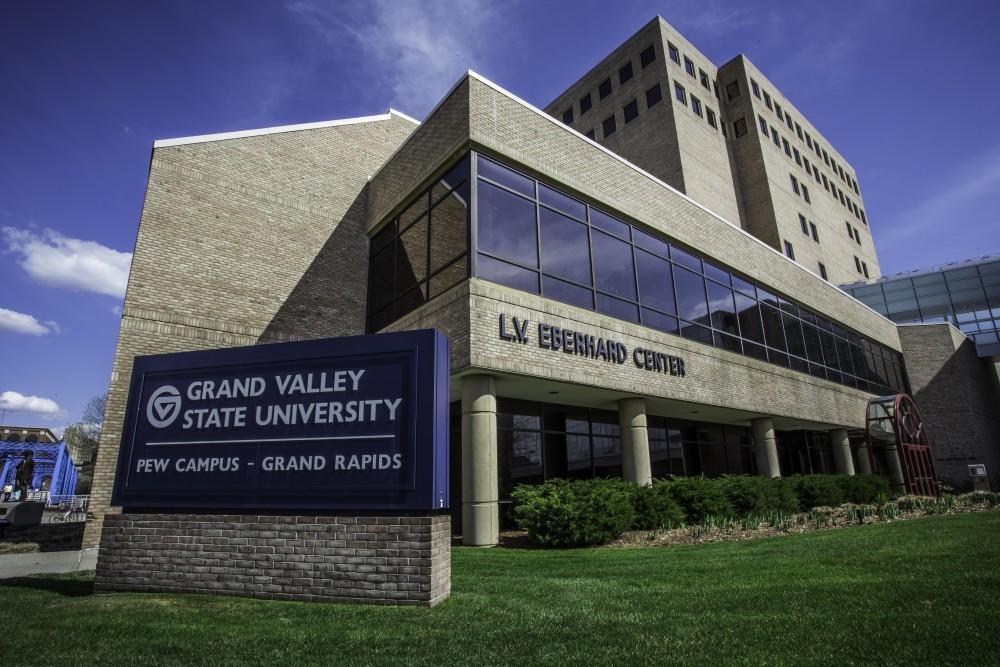
The second major decision outlined in the letter was the Blue Dot initiative, which received approval for debt financing in early February. The initiative is centered around the Blue Dot Lab, a tech center that will be housed within the L.V. Eberhard Center on the City Campus. Many members of the faculty are concerned about the project’s cost.
“When originally proposed, it was budgeted at $50 million,” the letter reads. “This project has since been split into the $64.6 million Blue Dot lab and $101.4 million renovation of the Eberhard Center, bringing the most recent budget total to $166 million.”
Mekik believes that while necessary to house the College of Computing, cost-efficient plans for the center could have been made on the Valley Campus.
“Just because you have the means to take on a debt doesn’t mean you should,” Mekik said.
Similar to concerns over Omni, Mekik feels faculty were not well informed about Blue Dot and associated financing when it was approved by BOT.
“It started as a small project (that) we kind of knew about it, and then boom, it just became $166 million, (a) total surprise,” Mekik said. “By the time we realized what’s going on, it was approved by the board, and if you didn’t happen to show up at that board meeting, you didn’t know what it is.”
The open letter then outlined three requests of the BOT. The first ask was for the board to share details on how the University plans to pay off Blue Dot debt. Specifically, faculty members requested “information regarding plans on how the Blue Dot Lab and Eberhard renovation will provide a return on investment.”
Second, faculty members asked the BOT to entertain rotating delegations of faculty, students and staff in administrative meetings so their voices can be heard. The third request asked that when GVSU chooses its next president, they have experience as a faculty member.
“Please consider a president who was once a faculty member with a true commitment to student success, and who therefore understands GVSU not just as a business, but as a place of learning,” states the letter.
Multiple anonymous, long-time professors expressed frustration that President Philomena Mantella, unlike previous GVSU presidents, lacks professional experience teaching in a classroom. Those interviewed feel Mantella runs the University like a business, as compared to previous presidents.
The Lanthorn will continue to follow this story as responses are received from all parties involved.