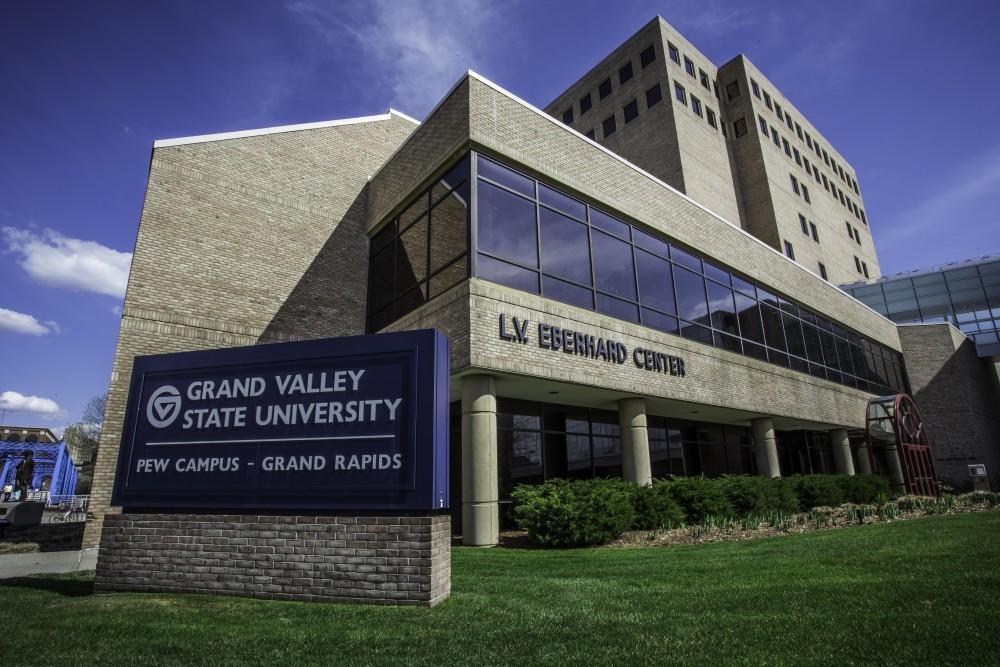



Grand Valley State University hosted a series of events last week as part of Global Climate Change Week.
Presentations, workshops, and panel discussions were held at the City Campus, Muskegon Community College, and virtually, aiming to bring attention to the event theme: rethinking the role of education in times of climate emergency. Speakers featured researchers, students and entrepreneurs, and addressed the role of clean water, wetland restoration and “green schools” in Michigan.
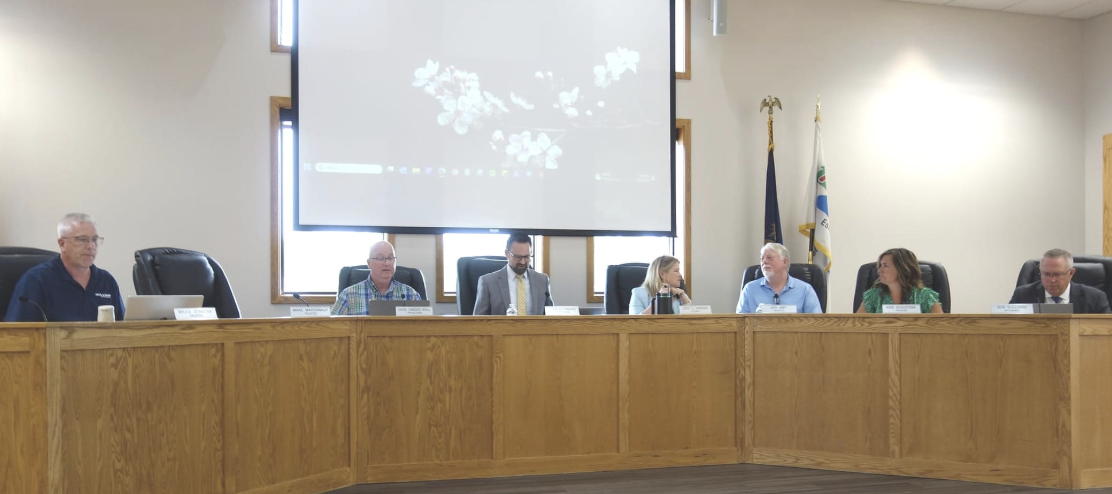
Associate Professor of English Brian Deyo moderated a panel, “The Truth About America’s Water — and How We Can Fix It,” which examined Michigan water resource data. The discussion included, Rich Razgaitis, CEO of FloWater, a company aiming to eliminate single-use plastic bottles. Razgaitis shared the average American has a plastic spoon’s worth of microplastics in their brain, and that there’s no federal mandate on lead testing in many public schools. More than 50,000 chemicals are used in the United States, and less than 100 of them are federally regulated. Due to this, 56% of Americans have consumed drinking water contaminated with lead within the past five years, and 158 million Americans drink water containing “forever chemicals” (PFAS).
Razgaitis expressed concern over extreme weather conditions that will continue to impact water resources. Rates of droughts, floods and storms are known to increase with global warming, disproportionately affecting impoverished communities. His presentation found systems with drinking water violations are 40% more likely to be found in places in communities of color.
“This is a problem worth solving, and it’s worth solving through efficiency, through our agency and through resource allegations,” Razgaitis said. “These changes would also include the modernization of the Safe Drinking Water Act, and accelerate the standards and regulation for chemicals like lead, PFAS, glyphosate and microplastics.”
Amanda Daniels, a senior and student assistant with the Michigan Department of Environment, Great Lakes and Energy, presented on wetland restoration in Allendale.
“The biodiversity crisis, in large part, is due to habitat loss, and habitat loss is due to human development” Daniels said.
Daniels’ study found algae in Allendale’s water supply is taking large amounts of oxygen, killing fish and plants, and creating what is known as a “dead zone.” Her restoration project proposes to better help wetlands retain water.
“This project could have a huge positive impact on our campus, but it could also be used as a model for best agricultural practices in the area, and hopefully (have) a big impact on rivers,” Daniels said.
Sean Woznicki, assistant professor at the Robert B. Annis Water Resources Institute, presented on green infrastructure for water resources protection. Similar to Daniels, his analysis reflected current development of a 25-year project relating to the restoration of wetlands in West Michigan.
“What we see as we replace forests, even agricultural lands, from soft landscapes (to) what I call hardscapes, (are) flood-prone environments,” Woznicki said.
Woznicki attributed flooding as a major impact of urban development, and highlighted Grand River flooding in 2018. His data emphasized climate change will increase storm frequencies and severity of associated damage. Woznicki is working toward the integration of “sponge cities,” designated wetlands scattered throughout Grand Rapids with the goal of retaining flood water and preserving habitats for plants and wildlife.
“There’s a lot of co-benefits that can be designed into creating these sponge-like efforts,” Woznicki said. “The whole idea is to keep water in place, let it sink into the soil and ultimately let it infiltrate and percolate into ground water.”
Collective efforts from the Global Climate Change Week events covered bases from drinking water, climate change, urbanization and wetland restoration, while incorporating the unique terrains of Grand Rapids and the rural Valley Campus.
“If we do not start (working to combat climate change) today, tomorrow will never come,” Razgaitis said.