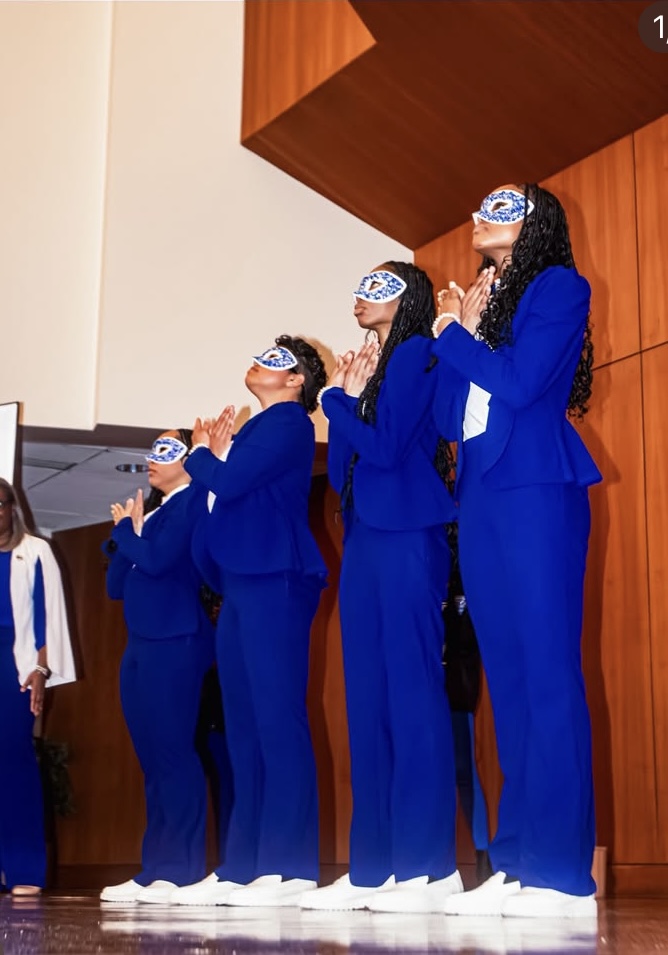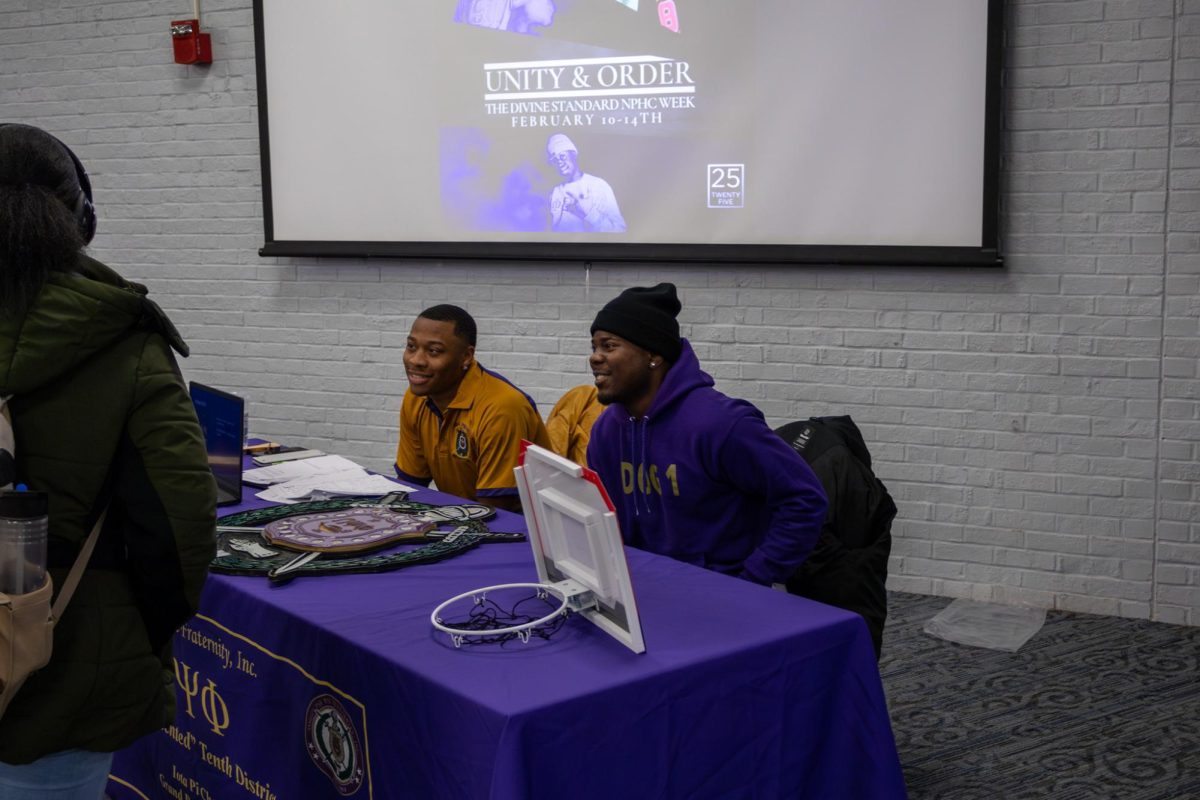



During the National Pan-Hellenic Council (NPHC) Yard Show Saturday, Sept. 13, the Divine Nine historically Black sororities and fraternities strolled, stepped and chanted in an energetic performance, serving as proof that cultural expression blooms and endures despite political turbulence.
Held at the Mary Idema Pew Library’s Amphitheater, the show drew an influx of students, alumni and faculty for one of the most culturally significant events of the semester. Chapters representing groups such as Alpha Phi Alpha, Alpha Kappa Alpha and Kappa Alpha Psi took the stage, gathering to celebrate Black culture and showcasing the importance of the Divine Nine on campus. The event combined elements of tradition and entertainment, engaging the audience with the rich history of Black Greek-letter organizations.
The event came days after violent threats forced several prominent historically Black colleges and universities (HBCUs) to enter lockdown, following the death of conservative activist Charlie Kirk. The performance was not in direct response to recent adversity, but rather to recognize and affirm identity, heritage and Black joy in times of political pressure. With the heightened unease of Black students following these threats, the show carried an added significance.
At Grand Valley State University, a predominately white institution, the event resonated with minority groups of students. On a campus where Black students make up a small percentage of the population, the Yard Show created a visible and safe space to honor history and connect with peers. The performances imbued the solemn amphitheater with lively jubilation, reminding the larger campus community that Black culture remains vibrant and essential to a unified student life.
Ta’les Love, assistant professor of interdisciplinary studies, weighed in on the event’s cultural message and historical context.
“The practices of dancing and stepping allow Divine Nine members to take pride in their organizations and collectively celebrate the perseverance and success of the members who came before us,” Love said. “Additionally, communal dancing is a key pillar of African American culture, allowing us to connect with one another through movement, bringing joy. It creates this shared understanding between us and the rest of the African diaspora, often serving as a form of collective resistance in the face of oppression.”
Love’s insights highlight how traditions like yard shows reflect Black resilience and connect students to their cultural legacies through movement and artistic expression. Love added that proclaiming pride and embracing origins are crucial in times where political divides can foster hate.
D. Hollowell, assistant director of the Milton E. Ford LGBT Resource Center, also emphasized how the NPHC Yard Show and Black communities continue to transform adversity into unity and shared pride.
“The Black community has always been one to defy racist expectations, limitations on freedom of expression, movement and the pursuit of happiness,” Hollowell said. “When I think of the Yard Show, I feel like there is something so beautiful in the fact that we boldly face the unknown together.”
In a week marked by attacks on HBCUs nationwide, the NPHC Yard Show stood as a testament to resilience. The event was not only about strolling and stepping, but the deeper meanings and traditions behind the movements’ creation. The show reclaimed space on a predominately white campus, demonstrating how Black culture continues to thrive in the face of political division.